If you have ever wondered how a facial massage can create a more sculpted appearance while also helping to release tension in the jaw, forehead and neck, Kobido massage offers an interesting answer. Unlike a conventional facial, authentic Kobido works not only on the surface of the skin but also on the facial muscles, connective tissues, circulation and areas where tension tends to accumulate.
Kobido is a traditional Japanese facial massage with roots dating back to the 15th century. Today, it is increasingly sought after in London by people looking for a natural approach to facial rejuvenation, relaxation and muscle tension.
At Kobido Kat, I combine traditional Kobido techniques with my knowledge of facial anatomy and years of experience working in osteopathy, sports injury and medical aesthetics environments. My aim is not simply to massage the face, but to work with the structures underneath it and tailor the treatment to what your face actually needs.
How does Kobido work on the skin?
One of the most noticeable effects of Kobido can be the way the skin looks immediately after treatment. The massage stimulates circulation in the facial tissues, helping to bring oxygen and nutrients to the skin.
Improved circulation can contribute to a fresher, brighter complexion. The rhythmic movements also encourage lymphatic drainage, which can help reduce temporary fluid retention and facial puffiness.
This can be particularly noticeable around the:
- Eyes
- Cheeks
- Jawline
- Lower face
- Forehead
If your face looks puffy after poor sleep, long working days, travel, stress or lifestyle factors, lymphatic massage may help the face appear less congested and more defined.
Kobido also involves repeated stimulation of the skin and underlying tissues. Rather than relying on a product to temporarily change the appearance of the skin, the treatment uses manual techniques to stimulate the tissues themselves.
The result can be skin that looks more refreshed, hydrated and radiant after a session.
One of the most noticeable effects of Kobido can be the way the skin looks immediately after treatment. The massage stimulates circulation in the facial tissues, helping to bring oxygen and nutrients to the skin.
Improved circulation can contribute to a fresher, brighter complexion. The rhythmic movements also encourage lymphatic drainage, which can help reduce temporary fluid retention and facial puffiness.
This can be particularly noticeable around the:
- Eyes
- Cheeks
- Jawline
- Lower face
- Forehead
If your face looks puffy after poor sleep, long working days, travel, stress or lifestyle factors, lymphatic massage may help the face appear less congested and more defined.
Kobido also involves repeated stimulation of the skin and underlying tissues. Rather than relying on a product to temporarily change the appearance of the skin, the treatment uses manual techniques to stimulate the tissues themselves.
The result can be skin that looks more refreshed, hydrated and radiant after a session.
How does Kobido work on facial muscles?
This is where Kobido becomes very different from an ordinary facial.
Your facial muscles are working throughout the day. You use them when you speak, smile, concentrate, frown and chew. Some muscles can also become chronically tense because of stress, jaw clenching or teeth grinding.
The jaw, temples and forehead are particularly common areas where tension accumulates.
During a Kobido treatment, I use different pressures and movements depending on the condition of the muscles. Some areas benefit from relaxation and release, while others can be stimulated to support better muscle tone.
This targeted approach is important because not every facial muscle needs the same treatment.
For example, muscles around the forehead and eyes can become overactive through repeated facial expressions. In contrast, other structures around the cheeks can lose firmness and benefit from stimulating techniques.
Kobido allows me to work with these different areas rather than treating the entire face in exactly the same way.
Can Kobido help with jaw tension and clenching?
Yes, this is one of the reasons many people seek Kobido beyond its cosmetic benefits.
Stress and teeth grinding can contribute to tension around the jaw, temples and cheeks. Some people do not realise how much tension they are holding in their face until those muscles are manually worked.
Kobido incorporates deeper techniques around areas where tension commonly develops. Releasing this tension can leave the face feeling lighter and more relaxed.
At Kobido Kat, I also work with clients who experience facial tension associated with bruxism, jaw clenching and headaches. Kobido is not a replacement for medical or dental care, but it can be a useful complementary treatment for people who want to address muscular tension manually.
What happens to the face during a Kobido treatment?
A Kobido treatment is not simply a sequence of relaxing strokes. The intensity and speed can change throughout the session.
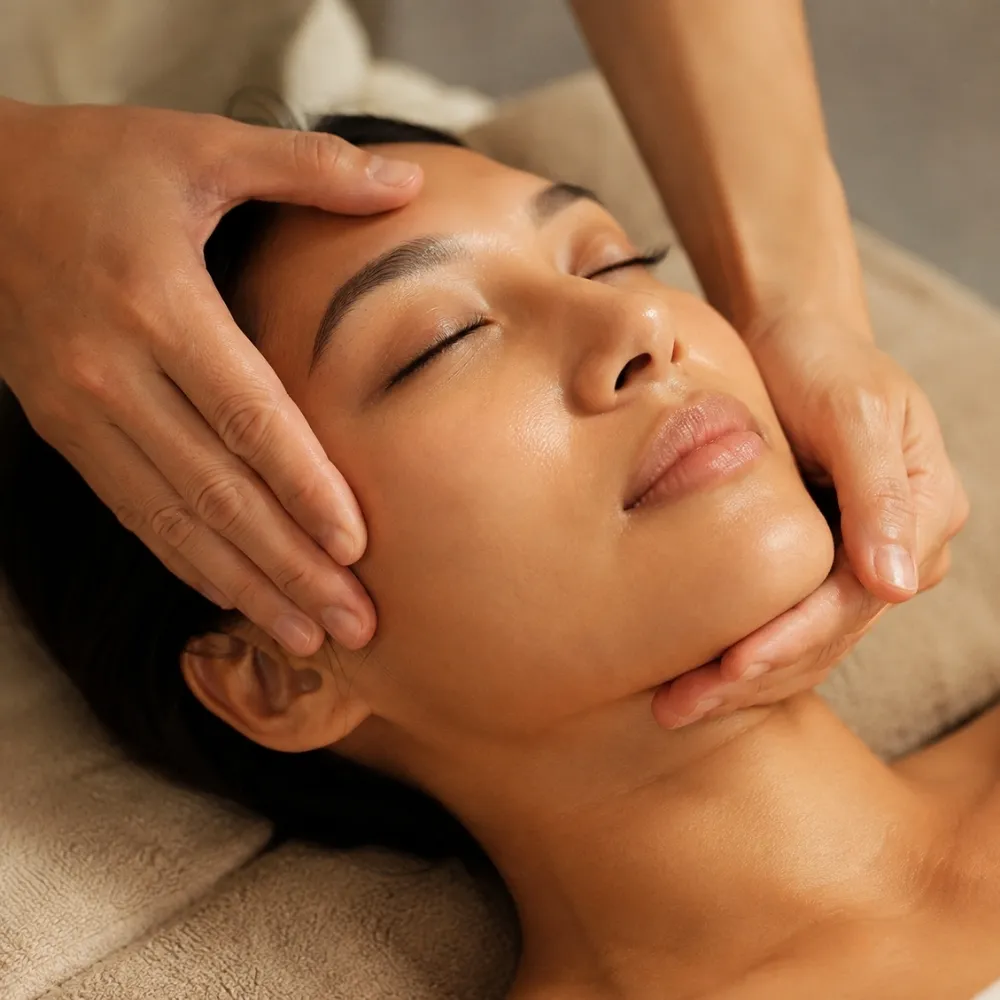
A typical treatment may incorporate:
Preparation and gentle movements: The face and surrounding areas are prepared for deeper work.
Deep massage: I work more specifically with facial muscles and areas of tension.
Lifting and sculpting movements: Faster and more stimulating techniques are used to encourage facial muscle activity and improve the appearance of the contours.
Lymphatic techniques: Specific movements can encourage fluid drainage and help reduce puffiness.
Acupressure and relaxation: Targeted pressure can help release tension and encourage a deeper sense of relaxation.
Final sculpting: The treatment brings the different techniques together to leave the face looking refreshed and more defined.
The exact treatment is adapted according to your facial structure, muscle tension, skin condition and individual concerns.
Kobido before and after: what results can you expect?
One of the reasons Kobido massage has become popular in London is that some changes can be visible after just one treatment.
You may notice:
- A more defined jawline
- Reduced facial puffiness
- A fresher complexion
- A temporary lifting effect
- Softer-looking tension lines
- More relaxed facial muscles
- A feeling of lightness around the face
- A more rested appearance
However, results vary from person to person. Your age, skin condition, muscle tension and facial structure can all influence what you notice after treatment.
Kobido is also not a permanent facelift. The effects are produced through manual stimulation, muscle work, circulation and drainage, so maintaining results requires consistency.
For clients who want to work on facial condition and muscle balance over time, I generally recommend a course of treatments followed by regular maintenance sessions rather than relying on occasional treatments.
Kobido massage vs a regular facial massage
So, what is the difference between Kobido and a standard facial massage?
The main difference is the depth, variety and precision of the techniques.
A traditional cosmetic facial massage may primarily use gentle movements to relax the face and distribute skincare products. Kobido has a much broader range of manual techniques and works specifically with facial muscles as well as the skin.
Kobido massage | Traditional facial massage |
Works with facial muscles and skin | Usually focuses more on the skin |
Includes fast rhythmic techniques | Often uses slower, gentler movements |
Can incorporate lymphatic techniques | May include basic drainage movements |
Targets areas of muscular tension | Primarily focuses on relaxation |
Includes sculpting and lifting techniques | Usually focused on skincare and relaxation |
Highly structured manual technique | Techniques vary between treatments |
This does not mean that one treatment is universally better than the other. They simply have different purposes. If your priority is facial sculpting, muscle tension, puffiness and a deeper manual treatment, Kobido may be a better fit.
Why is Kobido particularly relevant in London?
Living in London can mean long working days, commuting, screen time, stress and little opportunity to properly switch off.
These factors can show up on your face. You may notice yourself clenching your jaw while working, tightening your forehead while concentrating or waking up with tension around your temples.
Kobido provides an opportunity to address both sides of the problem: the visible appearance of the face and the muscular tension underneath it.
I offer Kobido treatments in Central London and Hammersmith, making the treatment accessible whether you work in the City, live in West London or are travelling through the capital.
My London treatment locations include the Central London Osteopathy & Sports Injury Clinic at 325 to 327 Old Street, EC1V 9LE, and Dermadoc Clinic in Hammersmith at 54 Shepherd's Bush Road, W6 7PH.

Is Kobido massage right for you?
Kobido may be worth considering if you are looking for a non-invasive facial treatment and are particularly interested in:
- Natural facial sculpting
- Facial rejuvenation
- Reducing puffiness
- Jaw and facial muscle relaxation
- Stress relief
- Improving the appearance of skin tone and texture
- Supporting facial muscle balance
- A natural alternative to more invasive aesthetic procedures
It can be suitable for both women and men, and the treatment can be adapted depending on your individual needs.
As with any specialised treatment, certain medical conditions and circumstances may mean Kobido is not appropriate. I always recommend discussing your circumstances before treatment so I can make sure the approach is suitable for you.
Experience authentic Kobido massage in London
Kobido works on more than just the surface of your face. By combining skin stimulation, facial muscle work, lymphatic techniques, rhythmic movements and relaxation, it takes a more comprehensive approach to facial wellbeing.
For me, that is what makes Kobido so interesting. The goal is not simply to make the face look different for an hour. It is about understanding how the skin, muscles and tension patterns interact and using precise manual techniques to support a more balanced, relaxed and refreshed appearance.
If you are looking for an authentic Kobido massage in London, I offer personalised treatments in Central London and Hammersmith. Whether your main concern is facial puffiness, visible signs of ageing, jaw tension, stress or simply wanting your face to look more rested, I can tailor the treatment to your individual needs.
Ready to experience Kobido for yourself? Book your Kobido facial massage in London with me and discover what this traditional Japanese facial sculpting technique can do for your skin and muscles.
Leave Your Comment