

A Deep, Targeted Facial Massage That Works From Within
Buccal Massage in London
Discover the benefits of Buccal Massage, an advanced intraoral facial massage technique designed to release tension deep within the facial muscles, particularly around the jaw, cheeks and mouth.
Working both inside and outside the mouth, this specialist treatment helps relax overworked facial muscles, stimulate circulation and reduce the appearance of facial puffiness. It is an ideal treatment for those who experience jaw tension, facial tightness or simply want to experience a deeper level of facial relaxation.
What Is Buccal Massage?
Buccal Massage, also known as Intraoral Massage, is a specialised facial massage technique that works on the deeper muscles of the cheeks, jaw and lower face from both inside and outside the mouth.
Unlike conventional facial massage, which primarily focuses on the external surface of the skin, Buccal Massage allows the practitioner to access deeper facial muscles that are difficult to reach using external techniques alone.
The treatment focuses on areas where tension commonly accumulates, particularly around the masseter, buccinator and other muscles involved in chewing and facial movement.
Everyday habits such as stress, teeth clenching and jaw tension can contribute to tightness in these muscles. Buccal Massage uses controlled manual techniques to help release muscular tension, encourage relaxation and support a more relaxed facial appearance.
Although the technique may look unusual at first, it offers a unique approach to facial massage by working with the underlying musculature rather than focusing solely on the skin.
How Does Buccal (Intraoral) Massage Work?
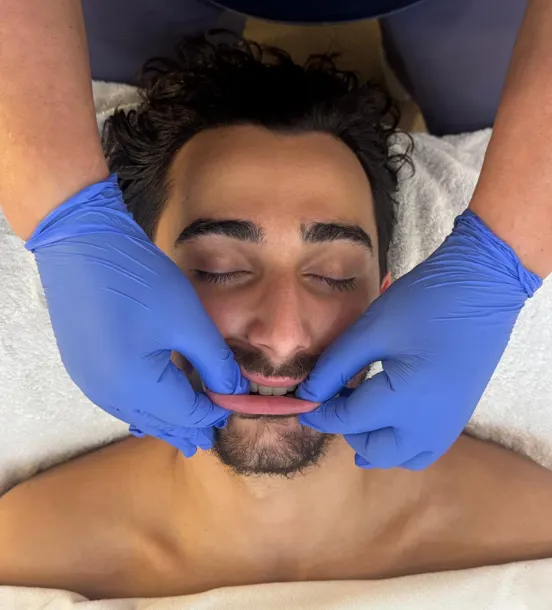
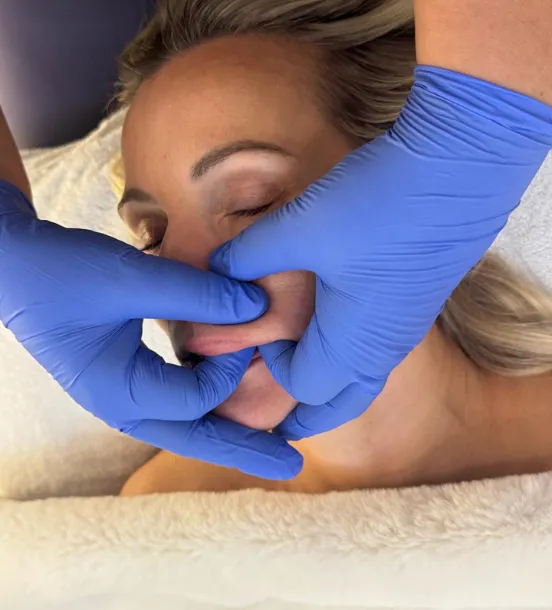
Buccal Massage is performed using a precise, two-handed technique that works simultaneously from inside the mouth and across the external facial tissues.
The practitioner wears appropriate examination gloves and applies gentle, controlled pressure to specific areas of the facial musculature.
By accessing the muscles from both sides of the cheek, the treatment can target areas of tension that are difficult to reach through conventional external facial massage.
The technique involves:
Working Deep Within the Facial Muscles
The practitioner works on the deeper muscles of the cheeks and jaw, including the masseter and buccinator, helping to address areas of muscular tightness.
Releasing Jaw and Cheek Tension
Targeted massage techniques help relax overworked muscles, particularly in areas affected by habitual clenching and everyday facial tension
Supporting Circulation and Lymphatic Flow
The massage stimulates local circulation and supports natural lymphatic fluid movement, which may help reduce temporary facial puffiness.
Encouraging Deep Relaxation
The slow, controlled movements encourage relaxation and provide a calming experience for both the facial muscles and the body.
Benefits of Buccal Massage
Buccal Massage offers a different approach to facial massage by addressing deeper muscular tension while supporting relaxation and facial wellbeing.
The treatment may be particularly beneficial for people who experience tightness around the jaw, cheeks and lower face.
Relief from Jaw Tension
One of the main focuses of Buccal Massage is the masseter muscle, which plays an important role in chewing and jaw movement.
Stress and habitual teeth clenching can contribute to muscular tightness in this area. Targeted massage may help relax the jaw muscles and ease feelings of tension and tightness.
Relaxation of Deep Facial Muscles
By working both inside and outside the mouth, Buccal Massage reaches deeper facial muscles that are not easily accessed through conventional facial massage.
This helps address areas of tension around the cheeks, mouth and lower face.
Improved Circulation and Reduced Puffiness
The massage encourages local blood circulation and supports lymphatic fluid movement.
This may help reduce temporary fluid retention and facial puffiness, leaving the face looking fresher and more relaxed.
A More Relaxed Facial Appearance
Muscular tension can influence how the lower face feels and looks. By working on tight facial muscles, Buccal Massage can help create a softer, more relaxed appearance.
Deep Relaxation and Wellbeing
The treatment provides a focused and calming experience, helping you slow down, relax and release accumulated tension in the facial area.
What to Expect During Your Buccal Massage Treatment
Your Buccal Massage experience begins with a consultation to understand your individual needs, facial concerns and treatment suitability.
The practitioner will explain the technique and answer any questions before beginning.
1. Initial Consultation
We begin by discussing your expectations, any areas of facial or jaw tension and relevant medical or dental history. This helps us determine whether Buccal Massage is suitable for you.
2. Preparation and Hygiene
Before the treatment, appropriate hygiene procedures are followed. The practitioner uses examination gloves and ensures that the treatment area and equipment are prepared safely.
3. External Facial Massage
The treatment may begin with external massage techniques focusing on the cheeks, jawline and surrounding facial muscles.
4. Intraoral Massage Technique
Wearing fresh gloves, the practitioner carefully works inside the mouth while supporting the external cheek tissue with the other hand.
Controlled movements target deeper facial muscles, helping to release areas of muscular tightness.
5. Finishing Techniques
The treatment concludes with appropriate external facial massage techniques, leaving you with a feeling of relaxation and reduced muscular tension.
Every treatment is adapted to your comfort level and individual needs.
Who Can Benefit from Buccal Massage?
Buccal Massage may be suitable for people who want to address facial tension and experience a deeper, more targeted facial massage.
It may be particularly beneficial if you:
- Frequently clench your jaw or grind your teeth.
- Experience tightness around your cheeks and lower face.
- Hold tension around your mouth and jaw.
- Notice facial puffiness or temporary fluid retention.
- Spend long periods feeling stressed or physically tense.
- Prefer a hands-on approach to facial relaxation and wellbeing.
- Want to complement your existing facial massage routine.
A consultation is always recommended to establish whether the treatment is appropriate for your individual circumstances.
Buccal Massage Contraindications: Who Should Avoid Treatment?
Your safety and wellbeing are always our priority.
As Buccal Massage involves working inside the oral cavity and applying pressure to facial tissues, it is important to identify any conditions that may make the treatment unsuitable.
Please inform your practitioner about any relevant medical conditions, recent dental procedures, aesthetic treatments, allergies or medication before your appointment.
When Buccal Massage Should Not Be Performed
Treatment should not take place if you have:
- Active cold sores, oral herpes, oral thrush or other infections affecting the mouth or facial area.
- Dental abscesses or active periodontal infections, particularly where bleeding is present.
- Open wounds, unhealed ulcers, cuts or lesions inside the mouth or on the lower face.
- Fever, flu, COVID-19 or another acute infectious illness.
- Unexplained lesions or active skin infections in the treatment area.
- A known allergy to the examination glove material being used, where a safe alternative cannot be provided.
When Additional Consultation or Postponement May Be Necessary
Please seek advice before booking if you:
- Have recently received dermal fillers, Botox or PDO threads. The appropriate waiting period depends on the treatment, area and practitioner guidance.
- Have undergone recent dental procedures, including tooth extractions, implants, root canals or oral surgery.
- Have recently had facial, neck or other relevant surgery.
- Wear fixed orthodontic braces or appliances that could cause injury during intraoral treatment.
- Experience an acute TMJ flare-up, severe jaw pain or jaw locking.
- Have neurological facial conditions, including trigeminal neuralgia or Bell's palsy.
- Have a bleeding or clotting disorder or take anticoagulant medication.
- Are undergoing cancer treatment or have a history of cancer affecting the head, neck or lymphatic system.
- Are pregnant, particularly during the first trimester.
In some circumstances, treatment may be possible following appropriate professional or medical clearance. Your practitioner will assess your individual circumstances before proceeding.
If you are unsure whether Buccal Massage is suitable for you, please contact us before making an appointment.
Frequently Asked Questions About Buccal Massage
What is the difference between Buccal Massage and a regular facial massage?
Is Buccal Massage painful?
Does Buccal Massage help with jaw tension?
Buccal Massage focuses on muscles involved in jaw movement, including the masseter and buccinator. It may help relax tight muscles and ease feelings of tension. However, it is not a replacement for dental or medical assessment of TMJ disorders or persistent jaw pain.
Can Buccal Massage help reduce facial puffiness?
The massage stimulates local circulation and supports lymphatic fluid movement. This may help reduce temporary facial puffiness and leave the face looking fresher.
How often should I have Buccal Massage?
The ideal frequency depends on your individual needs, preferences and response to treatment. Your practitioner can recommend a suitable treatment schedule following your initial consultatio
Is Buccal Massage suitable for everyone?
No. Certain oral infections, dental conditions, recent procedures and medical circumstances may make the treatment unsuitable or require postponement. A consultation and contraindication screening are important before treatment.
Can I combine Buccal Massage with Kobido Massage?
Buccal Massage and Kobido Massage can complement each other as part of a facial massage routine. While Buccal Massage focuses on deeper muscles accessed from inside the mouth, Kobido uses external techniques involving rhythmic movements, lifting-style massage and facial stimulation. Your practitioner can advise whether combining the treatments is appropriate.
What should I expect after Buccal Massage?
Many clients describe feeling more relaxed around the jaw and cheeks after treatment. You may also notice a temporary reduction in facial puffiness. Individual responses vary, and some temporary sensitivity may occur.
Experience Buccal Massage in London
Give your facial muscles the attention they deserve with a specialist Buccal Massage at Kobido Kat.
Whether you experience jaw tension, facial tightness or simply want to enjoy a deeper and more targeted facial massage, this treatment offers a unique way to support relaxation and facial wellbeing.
Discover the difference of working with the deeper muscles of your face.